



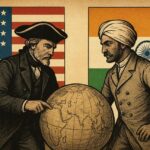



Few weeks ago, in a move that shocked markets and diplomats alike, President Donald Trump’s administration sharply increased tariffs across a broad range of imports — reigniting fears of a global trade war. While tariffs are not new to American economic policy, the scale, suddenness, and political signaling of this escalation suggest deeper structural intentions. But will this strategy succeed in rebalancing trade, reviving American manufacturing, and addressing America’s ballooning debt? Or will it simply usher in a new era of global economic instability?
Global Economy: Entering a Dangerous Spiral
The tariff hikes have already sent shockwaves through global markets. Countries heavily reliant on exports to the United States—including China, Germany, South Korea, and Mexico—now face the daunting task of recalibrating their trade relationships. Supply chains, already brittle post-pandemic, have been further strained. According to the Wall Street Journal, Asian economies are revising growth forecasts downward, citing uncertainty over U.S. market access.
Emerging markets, often the first casualties in trade wars, are seeing currency devaluations and investor flight. As seen during previous tariff episodes (e.g., Smoot-Hawley Act of 1930), protectionism tends to have far-reaching, often unintended, consequences.
Pain at the Checkout Counter for Americans
Although the Trump administration frames the tariff hikes as a means to “level the playing field,” the immediate burden falls squarely on the shoulders of the American consumer. Higher import taxes translate directly into higher retail prices for everything from electronics and clothing to household goods and food products. Without a rapid, scalable revival of American manufacturing—a tall order given decades of offshoring—consumers will have little choice but to absorb the costs.
There is a silver lining for certain U.S. manufacturers and local brands. Companies like Patagonia, Levi’s, and New Balance could theoretically benefit from a “buy American” sentiment wave. However, increased input costs (as many raw materials are also imported) and labor shortages mean that not every brand will thrive. Additionally, American factories built under modern standards may find it hard to offer products at a price point acceptable to a population accustomed to $10 T-shirts and $500 laptops.
A return of jobs is possible, but whether those jobs offer a comparable quality of life remains uncertain.
Tariffs vs. Debt: A Mismatch of Solutions
At first glance, punishing China through tariffs seems to target America’s large trade deficit. Yet trade deficits are not synonymous with national debt. America’s $34 trillion federal debt, according to U.S. Treasury data, is largely a result of domestic fiscal policy—massive spending, tax cuts without matching budget reductions, and entitlement obligations.
Even if tariffs narrowed the trade deficit with China, they would do little to dent the national debt unless accompanied by sweeping fiscal reform. In fact, slowing global growth and weaker U.S. consumption could depress tax revenues, ironically exacerbating the deficit problem Trump claims to fight.
China’s Counterattack: Brand Dilution and White Labeling
In retaliation, Chinese firms are now engaging in a sophisticated form of economic warfare: brand dilution. Increasingly, Chinese manufacturers are producing high-end, luxury-level goods nearly indistinguishable from major Western brands—Gucci, Louis Vuitton, Hermès—and offering them under generic labels or private brands.
While this phenomenon skirts the edges of intellectual property (IP) infringement, enforcement is difficult. These products often don’t carry the original trademarks, thus evading traditional IP law protections. According to reports from Reuters and South China Morning Post, Chinese consumers and even Western buyers are becoming more comfortable with “brandless luxury,” eroding the exclusivity that drives Western brand premiums.
The deeper issue is psychological: if consumers no longer care about brand logos, the West’s centuries-old soft power tool—the luxury brand—loses its luster.
Dumping and Drop Shipping: Will Tariffs Kill the Beast?
Chinese companies have long leveraged the U.S. market by flooding it with cheap goods, often through drop shipping models that require little or no local presence. Platforms like Amazon, Shopify, and even TikTok Shop have been vehicles for this trade.
Tariffs have already hit the eCommerce based drop shipping from China. Aside from heavy or high-tariff categories, now the import of shipments of total value less than $800 have also plunged since the “de minimis” exemption expired. However, some players who have diversified their drop shipping beyond USA would probably still survive. Also, unless digital marketplaces tighten enforcement on country-of-origin disclosures, many vendors may simply reroute goods through third countries—a loophole that experts at Harvard and CNBC warn is already being exploited.
Thus, while tariffs may reduce some low-cost “junk” imports, they are unlikely to eliminate the broader drop-shipping economy unless accompanied by much stricter regulation.
National Images at Stake: A Battle Beyond Economics
Beneath the visible battle over tariffs and trade balances lies a subtler, more critical conflict—the fight over global perception.
For decades, China’s image as the “Factory of the World” has been both its greatest strength and its Achilles’ heel. It fueled China’s meteoric economic rise but pegged Chinese goods as mass-market, low-cost, and often low-quality. Today, China is trying to rebrand itself as a high-tech innovator, but brand dilution tactics—such as mass-producing white-labeled luxury products—risk reinforcing old stereotypes.
According to the Pew Research Center’s 2024 Global Attitudes Survey, perceptions of China remain overwhelmingly negative in major economies like the U.S., Europe, Japan, and Australia, with concerns about unfair trade practices cited as a primary driver.
Meanwhile, America’s “Superpower” aura faces unprecedented skepticism. Rising protectionism, surging debt, and political instability are tarnishing America’s reputation as the architect and steward of the global economic order.
Confidence in U.S. leadership continues to decline globally. According to Pew’s U.S. Leadership Confidence Report (2024), fewer than 45% of respondents in allied nations believe the U.S. will “do the right thing” in international affairs—the lowest confidence level since the Iraq War era.
Thus, the stakes extend far beyond economics:
- For China, the risk is being seen permanently as a maker of imitations, not innovation.
- For America, the risk is losing the moral and institutional authority that has historically enabled its superpower status.
In a world where image influences investment, alliances, and consumer behavior, the perception war may be more decisive than the trade war.
India’s Golden Opportunity—But Not a Guarantee
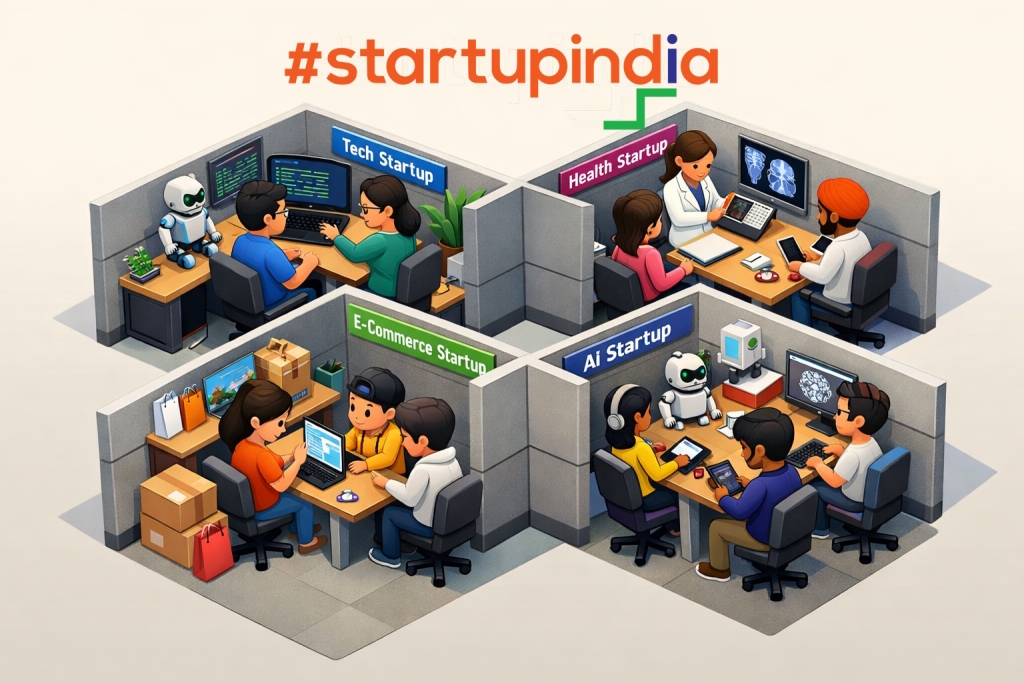
India stands uniquely positioned to capitalize on U.S.-China tensions. With a burgeoning manufacturing sector (helped by initiatives like “Make in India”), a young workforce, and improving diplomatic ties with Washington, India could gradually replace China in key sectors like electronics, textiles, and pharmaceuticals.
However, logistical challenges, regulatory bottlenecks, and infrastructure gaps still plague India’s ascent. As The Economic Times reports, while India is winning investment (e.g., Apple, Samsung), a lot depends on the future negotiations between India and these companies as well as USA to have long term plans for continued development and production in India. At present it is safe to say that India still has an uphill task of matching China’s scale, cost-efficiency, and export readiness. There also a more immediate risk of Indian companies simply acting as a transshipment agency for Chinese goods. Even the Indian Government is aware of this and is gearing up to track and prevent such practices.
Thus, India could be a major winner in the longer term—but it must address systemic inefficiencies quickly to truly step into China’s shoes.
Conclusion: A Gamble With No Guaranteed Winners
Trump’s tariff gambit is bold, disruptive, and potentially transformative. It could, if coupled with deep domestic reforms and strategic partnerships, reposition America’s industrial base for the 21st century.
But without corresponding investments in infrastructure, education, technology, and fiscal discipline, tariffs alone are a blunt instrument—more likely to bruise allies, enrage consumers, and destabilize the global economy than to usher in a new American Century.
Ultimately, whether America can reclaim manufacturing supremacy—or merely trigger a new Cold War of commerce—depends less on tariffs and more on political will, policy nuance, and global cooperation.