









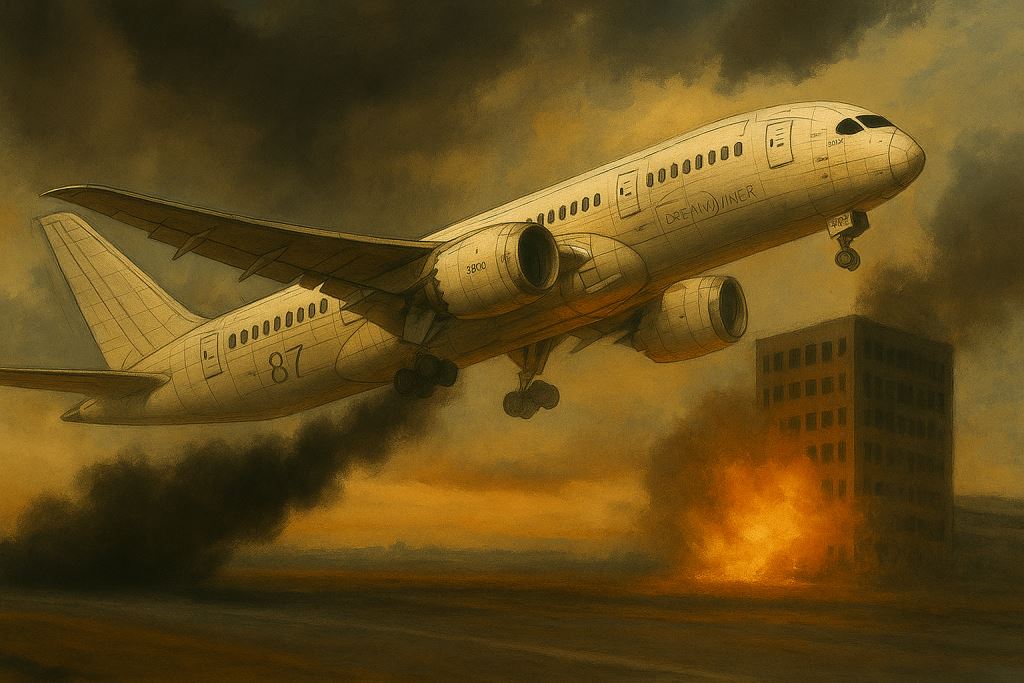
On June 12th, 2025, the world witnessed a grim déjà vu: Air India Flight AI-171, a Boeing 787 Dreamliner en route from Ahmedabad to London, had crashed just moments after takeoff. The tragedy claimed 241 lives onboard as well a rising death toll on ground as the plane crashed into a hostel compound of a medical college adjacent to the airport. While the investigation is still underway, for many who’ve followed Air India’s recent trajectory, this wasn’t entirely unexpected. It felt like a ticking clock finally hitting zero.
At The Local Brand, we’re not here to add to the noise or echo official condolences. We’re here to talk about the systemic brand failures that led to this moment. Because long before this aircraft hit the ground, the brand itself was already in free fall.
The Tata Takeover: From Maharaja to Makeover
When Tata Sons reacquired Air India from the Indian government in 2021, it was seen as a homecoming. What could go wrong? A legendary business house taking back control of the airline it once birthed – there was hope. Rebranding, new uniforms, a record-breaking order of aircraft, and promises of global service parity – all made headlines. But beneath that surface was a different reality.
Air India was – and arguably still is – a relic of bureaucratic decay. Its revival needed more than a fresh coat of paint. What it needed was an operational exorcism. But the Tata leadership underestimated the rot. For all the positive PR and rebranding campaigns, critical complaints about poor cabin conditions, outdated entertainment systems, delayed flights, and unresponsive service remained unresolved. These weren’t outliers; they were the norm.
The Aircraft That Shouldn’t Have Flown
Let’s talk about the aircraft: the Boeing 787 Dreamliner. Marketed as the future of aviation, the Dreamliner has had a controversial past – battery fires, software glitches, and structural concerns. Add to that recent whistleblower testimonies from former Boeing employees, which have cast fresh doubt on the aircraft’s manufacturing integrity.
The AI-171 was over a decade old. In aviation terms, that’s not ancient – but when maintenance is erratic and systems are known to have recurring faults, even a ten-year-old plane can become a flying liability. Reports indicate that this aircraft had undergone multiple short-cycle flights and had pending complaints related to hydraulic and flap system irregularities.
Was it airworthy? Technically, yes. But was it safe by global best standards? That’s debatable.
A Culture of Warnings Ignored
What makes this crash particularly disturbing is that the signs were all there. Passengers had taken to social media over the past year, especially travel vloggers and aviation bloggers, who posted videos showcasing malfunctioning seats, broken tray tables, faulty IFE screens, and even leaking lavatories on international Air India routes.
Employees – cabin crew, maintenance engineers, ground staff – have repeatedly spoken about the lack of investment in upkeep. Internal reports flagged chronic understaffing, delayed part replacements, and the use of outdated checklists. Even DGCA, India’s aviation regulator, had issued at least two advisories to Air India in the past 18 months, pointing out safety inconsistencies.
It’s one thing to deal with aging assets. It’s another to be willfully blind to them.
Industry Reactions & The Road Ahead
The global aviation community has responded with a mixture of sorrow and scrutiny. Boeing has released a statement promising full cooperation with investigators. The Aircraft Accident Investigation Bureau (AAIB) of India, with assistance from the NTSB (US) and UK regulators, has already recovered the black boxes. Preliminary findings suggest issues with the thrust management system and flap extension during takeoff.
DGCA has since grounded all Boeing 787-8 and 787-9 aircraft operated by Indian carriers for immediate inspection. Meanwhile, Tata Sons has pledged a full internal audit and crisis support for affected families. But these are reactive measures. The brand damage is already done.
A Brand’s Legacy is Built in How It Listens
Air India didn’t crash overnight. It eroded over decades. The Tata takeover gave it a lifeline, a second chance to reclaim glory – but only if it was willing to change from the inside out. That never truly happened.
Branding isn’t about shiny logos or heartwarming campaigns. It’s about lived experiences. A customer doesn’t remember the tagline; they remember how the flight smelled, how the seat felt, how safe they felt mid-air. Air India has for too long ignored these truths.
The airline’s failure wasn’t in the engine room alone – it was in the boardrooms, in complacency, in bureaucratic inertia, and in a culture that treated red flags as background noise.
Now, it’s all front and center. And after a loss of more than 274 lives, the brand must face its reckoning.
This tragedy must serve as more than another entry in the annals of aviation mishaps. It needs to be a line in the sand. For Air India, this is the final boarding call – not just for accountability, but for meaningful transformation.
Because no brand should have to burn before it’s rebuilt.