









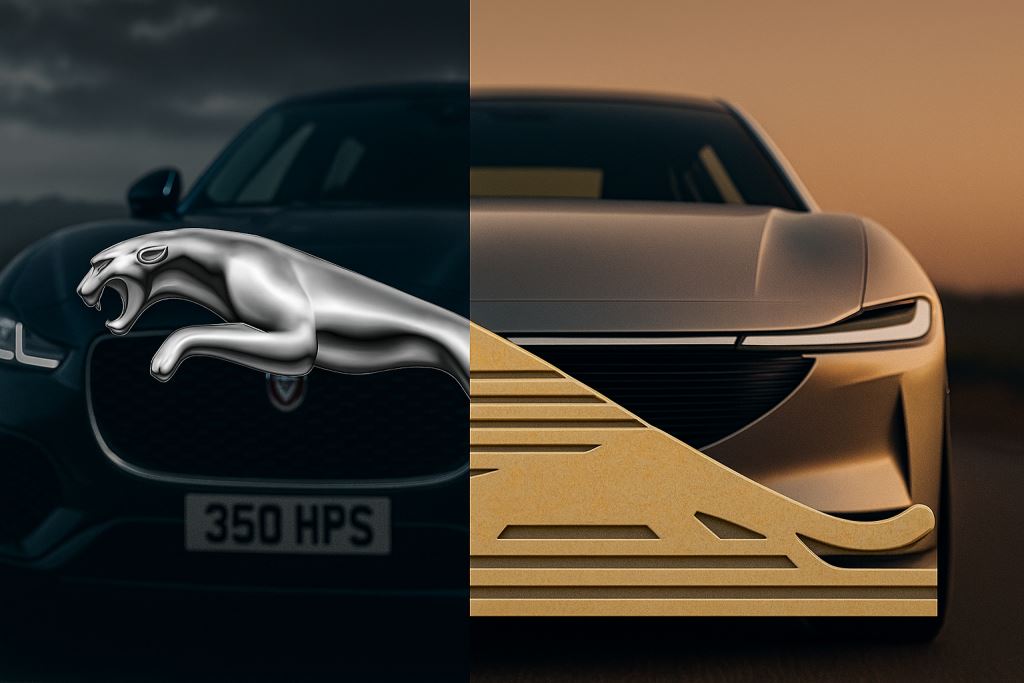
In a shocking shift that’s left long-time enthusiasts reeling, Jaguar unveiled a major brand overhaul in November 2024 — a change that seems to have roared in with more confusion than clarity. The luxury automaker, synonymous with British elegance and feral sophistication, has shed its iconic leaping cat logo in favor of a minimalist, Gen Z-inspired visual identity. While the intention was to signal a move into an electric future, what has resulted is a rebrand that feels like a betrayal of legacy, and potentially a contributor to the company’s recent decline in market value and share prices.
The Bold Leap — Or Was It?
Since its inception in 1935, Jaguar has cultivated an image of grace and performance. The leaping jaguar emblem wasn’t just a logo — it was a statement of power, agility, and prestige. So when the automaker announced a sweeping brand refresh — with a new flat lowercase wordmark and the omission of its feline icon — eyebrows were raised across the branding and automotive industries.
This change, led internally by Jaguar’s Chief Creative Officer Gerry McGovern, was executed in partnership between Jaguar’s in-house creative agency Spark44, and Accenture Song. The rebrand was intended to appeal to a younger, digital-native audience. But what was billed as a bold step forward looks more like a misstep. Critics warned early on that stripping away the symbolic visual equity of the leaping jaguar could alienate loyal customers — and it seems they were right. Now the company is reviewing the agency which may be an indication of seeking out a new agency to do damage control.
Pandering or Progress?
In what appears to be a desperate effort to capture the attention of Gen Z, Jaguar’s rebrand trades substance for surface. The lowercase sans-serif wordmark lacks the gravitas the brand once commanded, reducing its once-roaring presence to a whisper. The vibrant, overly energetic color palette feels more suited to a tech startup or fashion house than a storied automotive giant.
Gone is the sleek, confident posture of a luxury predator — replaced instead with ambiguity. For a brand whose very name is derived from a wild animal, omitting the jaguar itself is more than ironic — it’s baffling.
Branding Without Insight
Spark44, now part of Accenture Song, has worked with Jaguar on numerous brand campaigns in the past. But this latest design initiative feels like a case of overcorrection. While their digital experience pedigree is strong, they appear to have approached Jaguar’s legacy with too much aesthetic ambition and too little contextual respect. Legacy brands require stewardship, not reinvention for reinvention’s sake. A rebrand should evolve with the times, not abandon its roots.
By ignoring the power of nostalgia and emotional resonance that Jaguar’s older branding held, the creative team may have traded cultural capital for trendy visuals. What they produced may be palatable on a digital screen but feels lifeless in the showroom.
A Misalignment of Strategy and Audience
The transition to electric vehicles was always going to be a delicate pivot for Jaguar. But using that as justification for an abrupt identity overhaul risks alienating the very clientele most likely to spend big on premium EVs: older, affluent buyers who cherished Jaguar’s legacy. Instead of easing customers into the future, the brand seems to have slammed the door on its past.
Moreover, such drastic branding changes, when not grounded in consumer insight, can have unintended consequences — and Jaguar’s stock performance may be reflecting just that. As reported by the Financial Times (source), the timing of the rebrand, amidst market volatility and declining sales, couldn’t have been worse.
According to Autocar India (source), the backlash hasn’t just come from the public — internal stakeholders at Jaguar Land Rover have expressed discomfort and disapproval over the rebranding. The decision to discard key legacy symbols reportedly sparked confusion and resistance within Jaguar’s own design and marketing teams, suggesting that the dissonance was more than skin-deep.
Campaign Asia (source) also reported that Jaguar has launched a global creative agency review in the wake of its rebranding, signaling possible reconsideration of its current creative direction.
Concept Cars, Confusion, and Cultural Drift
Adding to the identity crisis, Jaguar unveiled its all-electric concept model, the Type 00. While it aims to showcase the brand’s commitment to innovation and electrification, the vehicle has received mixed reviews. Critics note the stark departure from Jaguar’s design heritage — the curves, aggression, and subtle menace that once defined cars featured in James Bond films or the iconic “Good to be Bad” campaign seem to be completely erased. The Type 00 feels as though it could belong to any luxury EV startup, lacking the distinctive flair that once made Jaguar unmistakable.
When a brand like Jaguar begins to look interchangeable, it loses not just recognition — it loses reverence.
Learning from the Greats
If Jaguar needed inspiration, they might have looked to successful legacy rebrands. Brands like Porsche and Bentley have evolved visually without discarding their essence. Even Rolls-Royce, in moving toward a younger, ultra-luxury demographic, retained its identity while subtly modernizing its image. These examples prove it’s possible to pivot to the future without erasing the past.
What we think
Jaguar can still course-correct. This is not the first time they have faced such a branding debacle. Acknowledging the backlash doesn’t require a full reversal, but a tempered approach that reintroduces elements of the brand’s core identity. Perhaps the feline can return in some stylized form, and the typography regain some of its commanding elegance. And next time, insight must precede aesthetics.
In the rush to appear modern, Jaguar seems to have forgotten what made it majestic. To truly thrive in the electric age, the brand must remember that identity isn’t just what you look like — it’s who you are.
At TheLocalBrand.com, we believe branding is more than design. It’s storytelling, legacy, and trust — elements that can’t be replaced by trendiness alone.