







Critical Analysis: Anthropic’s “Labor Market Impacts of AI” – Beyond the Observed Exposure
The recent research published by Anthropic, “Labor market impacts of AI: A new measure and early evidence,” introduces a sophisticated metric: Observed Exposure. By moving past theoretical capabilities to track actual Claude usage data, Anthropic provides a grounded view of how AI is infiltrating the workplace. However, for someone working with entrepreneurs and industry leaders for nearly 2 decades, I mostly focuses on the intersection of brand evolution and human ingenuity. To me the report feels like a meticulous map of a territory that is already changing shape.
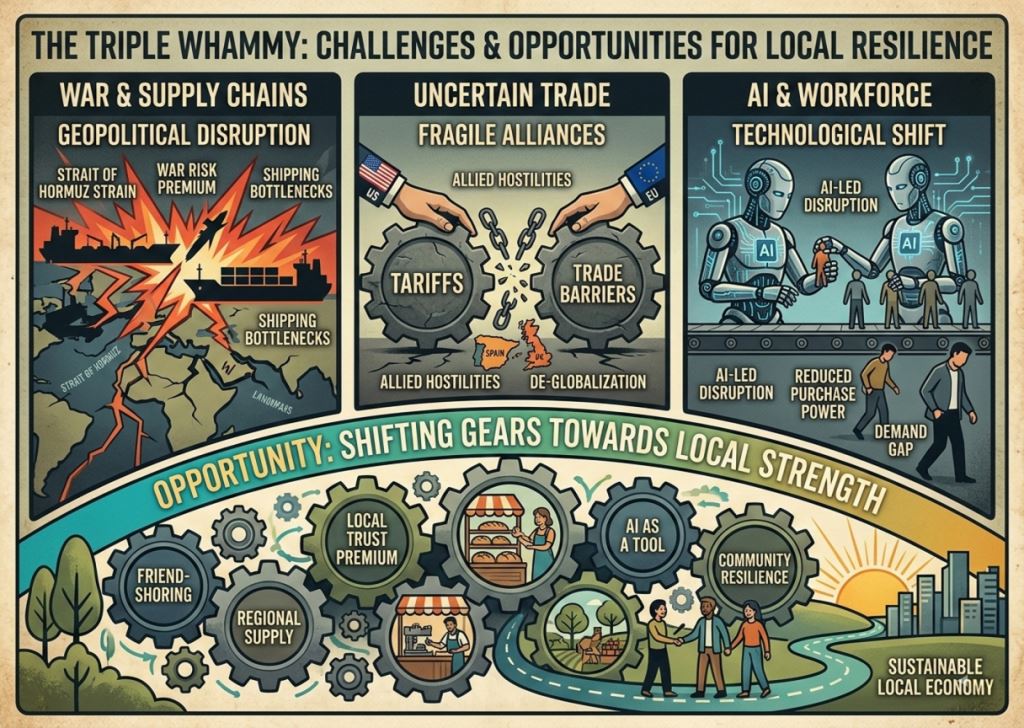
While the data is invaluable, a critical analysis reveals four significant gaps that policymakers and industry leaders must address to navigate the coming decade.
The Luddite Fallacy and the Illusion of “Observed” Safety
The report leans on the historical “Luddite Fallacy” – the idea that new technology creates as many jobs as it destroys. Anthropic’s finding that there is “no systematic rise in unemployment” since late 2022 is being used to soothe anxieties. However, this ignores that AI is not a traditional “disruptive technology” like the steam engine or the internet; it is a replacement for the cognitive process itself. The report notes a 14% drop in hiring for young workers (ages 22-25) in highly exposed roles. This is the “silent disruption.” We aren’t seeing mass layoffs (yet), but we are seeing the “closing of the front door.” By focusing on current employment stability, the research risks validating a modern Luddite Fallacy: assuming that because the “total” number of jobs hasn’t dropped, the nature and accessibility of those jobs remain intact.
The Missing Bridge: Industry 4.0 to Industry 5.0
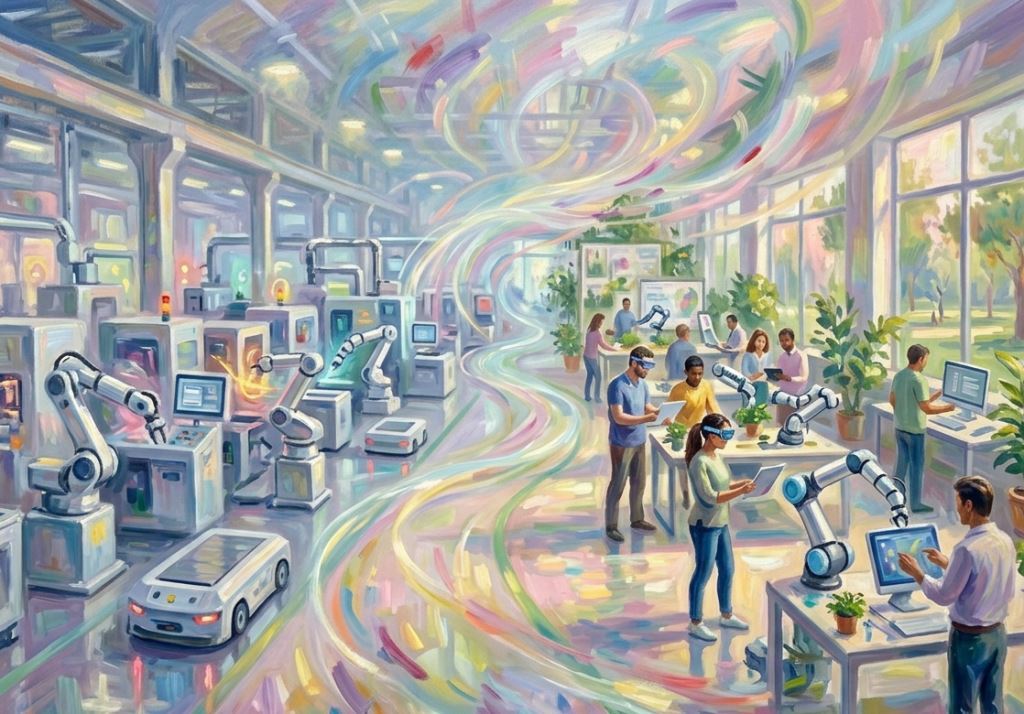
We are currently in Industry 4.0, defined by automation, IoT, and smart systems. The Anthropic report perfectly catalogs this stage. However, it offers no roadmap for the transition to Industry 5.0, which is characterized by the re-personalization of work and the collaboration between humans and smart systems.
Anthropic’s “Observed Exposure” treats “automation” and “augmentation” as data points on a spreadsheet. It fails to discuss how a workforce moves from being “exposed” (Industry 4.0) to being “empowered” (Industry 5.0). Without a roadmap for this transition, we are merely observing the erosion of old roles rather than architecting the creation of new, human-centric ones.
The Simplicity-Intellectuality Paradox
The research correctly identifies that “Computer Programmers” and “Customer Service Reps” are highly exposed. Yet, it misses the core reason: the Simplicity vs. Complexity and Repetitiveness vs. Intellectuality of tasks.
- The Gap: AI thrives on “Intellectual Repetitiveness”; tasks that require high logic but follow predictable patterns (like debugging code or summarizing legal briefs).
- The Oversight: The report struggles to distinguish between “High Exposure” (tasks AI can do) and “High Impact” (tasks where human intellect is the value-add). By focusing on “coverage,” the report implies that if 75% of a programmer’s tasks are covered, 75% of the job is gone. It ignores that the remaining 25% – the architectural vision and ethical judgment – are what actually define the profession’s value.
Accountability: The Ghost in the Machine
Perhaps the most glaring omission is the level of Decision-Making and Accountability required in a role. Anthropic measures “Task Success,” but “success” in a vacuum is not the same as “responsibility.”
- An AI can draft a medical diagnosis (High Exposure), but it cannot be sued for malpractice.
- An AI can write a financial plan, but it cannot stand before a board of directors to defend it.
The survey data treats a “task completed” by AI as a “task removed” from a human, without accounting for the fact that the human must still provide the final signature of accountability.
A Proposed Response: The Labor Market’s Counter-Strategy
To move beyond being mere “observed subjects” of AI exposure, the labor market and editorial leaders should pivot toward the following:
A. Human-Centricity by Design: We must move away from “Technology-First” implementation. AI should be viewed as a high-performance power tool, not a remote-controlled replacement. The focus should be on how AI can handle the “drudgery” of data to free humans for “discovery.”
B. Incentivizing Governance and Innovation: We should stop measuring AI solely by “efficiency.” Instead, we need to explore and incentivize AI’s capacity to accelerate innovation, increase transparency, and expose corruption. If AI can audit a million transactions in a second, its greatest value is in improving governance, not just cutting accounting headcounts.
C. The “Physical World” Survey: The Anthropic report acknowledges that physical jobs (cooks, mechanics) are “insulated.” Perhaps a new survey can be proposed focusing on the Impact of AI on Lifestyle and the Physical World. We need data on how AI is actually accelerating things such as:
- Drug Discovery (saving lives, not just time).
- Energy Security (optimizing grids).
- Space Tech & Transportation (expanding our physical frontiers).
Narrative vs. Conversation
We should challenge the narrative that “Exposure = Displacement.” We should champion a future where AI handles the complexity of the data, so humans can handle the complexity of the soul. The report by Anthropic is a great start, but it’s time to move the conversation from how much work AI is doing to what kind of world that work is building.