






New study published by Pew Research reveal ‘Morality’ plays which may have major impact on brand marketing in cultural context.
The recent Pew Research Center study, “In 25-Country Survey, Americans Especially Likely to View Fellow Citizens as Morally Bad,” has sent shockwaves through the marketing and social science communities. This survey was done in 2025 and the analysis published in March 2026. The data reveals a stark anomaly: the United States is the only nation among the 25 surveyed where a majority (53%) of adults describe the morality and ethics of their fellow citizens as “bad.” While countries like Canada enjoy a high-trust environment (92% seeing fellow citizens as “good”), the American landscape has fractured into a “low-trust society.”
For brands and startups, this isn’t just a sociological curiosity; it is a fundamental shift in the “moral infrastructure” of the marketplace. When consumers no longer trust their neighbors, they don’t just change who they vote for—they change how, why, and from whom they buy.
The Moral Reckoning of the Consumer
How does a “morally bad” perception of one’s neighbor influence a purchase? It creates a Defensive Consumer. In a low-trust environment, every transaction is viewed through a lens of skepticism. Consumers are no longer just looking for “value for money”; they are looking for “moral alignment.”
The Pew data shows that while Americans are increasingly skeptical of each other, they are not necessarily becoming more puritanical. For instance, the U.S. is “middle of the pack” on issues like gambling or marijuana use, but leads the world in condemning extramarital affairs (90%). This suggests that “public morality” is now less about private vices and more about interpersonal integrity and social contracts. Customer Profile Inferences:
- The Vigilant Skeptic (U.S. Profile): High sensitivity to “hidden agendas.” They seek radical transparency. If a brand’s supply chain or executive behavior contradicts its stated values, this profile views it as a personal betrayal.
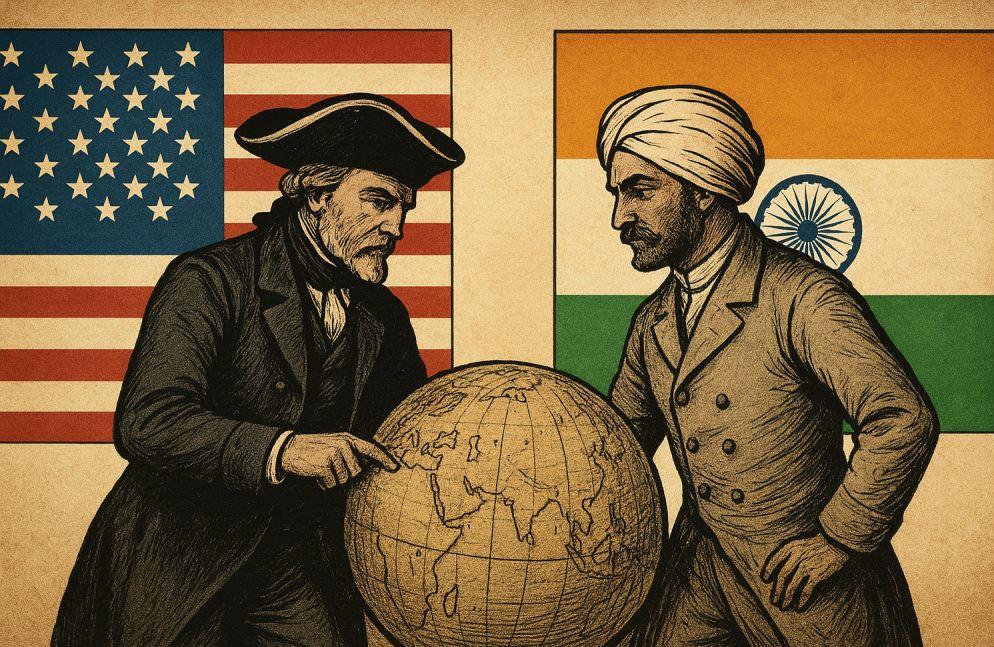
- The Communal Optimist (e.g., Canadian/Indian Profile): More likely to respond to “aspirational” and “togetherness” messaging. They still believe in a shared social fabric and are more open to brands that promote collective well-being.
Strategies for Startups: Identifying the ICP and GTM
Startups cannot afford to ignore these cultural fault lines. When building an Initial Customer Profile (ICP), founders must look beyond demographics (age, income) and into “Moral Psychographics.”
- ICP Refinement: If your product targets the U.S. market, your ICP is likely suffering from “Trust Fatigue.” Your messaging shouldn’t just be “We are the best,” but “We are the most honest.”
- GTM (Go-To-Market) Caution: In a society where 60% of Democrats and 46% of Republicans view the “other side” as morally compromised, a brand’s political neutrality—or lack thereof—is a high-stakes gamble. Startups should use Pew-level research to map where their product category sits on the “Moral Unacceptability” scale. For example, if you are a fintech startup, the “paranoia culture” mentioned in social discourse around this study suggests that “Self-Custody” and “Decentralization” are not just features—they are moral safeguards for a low-trust public.
- Campaigns of Verification: Move from “Storytelling” to “Story-proving.” In low-trust markets, third-party certifications, open-source data, and “unfiltered” founder stories outperform polished, high-production commercials.
Why Community-Driven Marketing is the Antidote
The Pew study highlights a vacuum: the collapse of national moral cohesion. This is precisely why Community-Driven Marketing is currently the most effective strategy.
When people stop trusting the “macro” (the nation, the government, the general public), they retreat into the “micro” (special interest groups, local circles, niche online communities).
- Context is King: Community-driven marketing works because it operates in a high-trust “micro-climate.” A brand that fosters a tight-knit community provides the “social proof” that the broader world lacks.
- The Tribal Safe Haven: If a startup can set the context right—creating a space where members feel their specific moral sensibilities are understood—it becomes more than a vendor. It becomes a sanctuary.
Crafting Communication: The Sensitivity Filter
Brands must be surgically precise in their communication. In a divided moral landscape, “Globalist” or “One-size-fits-all” messaging often falls flat or, worse, triggers “low-trust” alarms.
The Golden Rules for Brand Communication:
- Acknowledge the Friction: Don’t pretend the world is perfect. Acknowledge the challenges of the current era. Authenticity is the only currency that hasn’t devalued in a low-trust economy.
- Localize the Ethics: What is “morally good” in Jakarta (where God and morality are linked) is different from Stockholm or New York. Brands must hyper-localize their ethical stance.
- Avoid “Moral Grandstanding”: Because Americans are primed to see “bad ethics” in others, they are hyper-aware of “virtue signaling.” If you claim a moral high ground, you must be prepared for a forensic audit of your brand’s history.
The 2026 Pew study is a warning: the “Social Contract” is fraying in the world’s largest consumer market. Brands that succeed in this decade won’t just be those with the best tech or the lowest prices; they will be the ones that act as a “Moral Compass” in a world where consumers are desperately looking for someone—anyone—to trust.
For more detailed understanding of this perceptual study, visit the report on Pew Research website.